Specifying GRP Walkways for Food & Beverage Facilities: Meeting UK Industry Standards
Specifying GRP walkways in food and beverage facilities is essential for meeting stringent UK industry standards while ensuring safety, hygiene, and operational efficiency. GRP walkways offer a durable, non-corrosive, and slip-resistant solution that aligns perfectly with the rigorous demands of the sector.
This article explores the benefits and applications of grp walkways in food and beverage environments, focusing on compliance with UK regulations, material properties, and the critical role they play in maintaining safe working conditions and protecting production integrity.
Understanding GRP Walkways and Their Application in Food & Beverage Facilities
Glass reinforced plastic (GRP) walkways are engineered composite structures designed to withstand harsh environments common within food and beverage manufacturing and processing plants. Their corrosion resistance makes them ideal for areas exposed to moisture, chemicals, and regular washdowns, ensuring longevity and minimal maintenance.
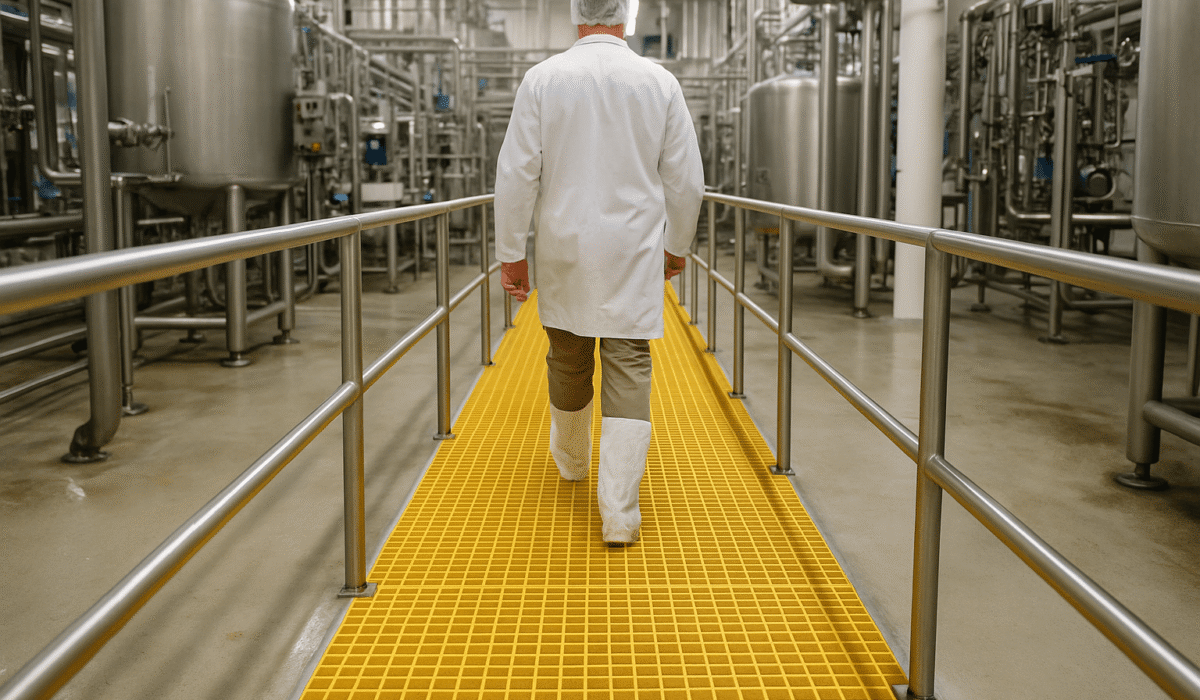
In the food and beverage sector, maintaining hygiene and preventing contamination are paramount. GRP walkways with smooth, non-porous surfaces help comply with hygiene regulations by reducing microbial growth and facilitating easy cleaning. Furthermore, the walkways provide a solid, slip-resistant footing to improve worker safety in wet or oily conditions.
Meeting UK Industry Standards and Safety Requirements
UK food safety and occupational health standards dictate strict criteria for materials and safety features in production environments. GRP walkways are designed to comply with these standards, including compliance with Health and Safety Executive (HSE) guidelines and the Food Standards Agency’s requirements for equipment hygiene and worker protection.
Using GRP walkways helps meet the Construction (Design and Management) Regulations by offering lightweight, robust platforms that reduce installation time and risk. Additionally, the inherent anti-slip properties ensure compliance with the Workplace (Health, Safety and Welfare) Regulations, reducing incidents of slips and trips—one of the most common workplace accidents.
Key Factors When Specifying GRP Walkways in Food & Beverage Facilities
Durability and Chemical Resistance
Specifying the correct grade of GRP ensures resistance to acids, alkalis, and fats commonly encountered in food processing. This resilience prevents degradation and contamination, preserving the integrity of both the walkway and surrounding products. Selecting materials with UV resistance also protects walkways in outdoor or high-light environments.
Slip Resistance and Safety Features
Safety is critical in food facilities, where spills are frequent. GRP walkways incorporate textured surfaces or additional anti-slip coatings that maintain grip under wet or oily conditions. Integrating complementary safety components such as GRP handrails or access platforms further enhances operative safety, creating a fully integrated and secure working environment.
Benefits of GRP Walkways in Food & Beverage Settings
- Superior corrosion resistance extends lifespan and lowers maintenance costs in wet or chemical-exposed areas.
- Lightweight construction reduces installation time and structural load requirements.
- Non-conductive properties improve safety in environments where electrical hazards may be present.
- Enhanced hygiene through seamless surfaces that resist bacterial growth and facilitate cleaning.
Speak to Our Specialists
Explore how custom GRP walkways can optimise safety and operational efficiency in your food and beverage facility. Contact our expert team to discuss your project requirements and receive tailored recommendations.
Frequently Asked Questions
Are GRP walkways compliant with UK food safety regulations?
Yes, GRP walkways can be specified and manufactured to meet UK food safety and hygiene regulations, ensuring materials are suitable for environments requiring stringent contamination control.
How do GRP walkways withstand harsh cleaning chemicals?
GRP materials are highly resistant to a broad range of chemicals commonly used in food processing, including acids, alkalis, and detergents, maintaining structural integrity and surface quality over time.
Can GRP walkways improve workplace safety?
Absolutely. Their anti-slip surfaces and compatibility with safety accessories such as handrails help reduce slip and trip hazards, crucial for maintaining safe food production environments.
What is the typical lifespan of a GRP walkway in food and beverage facilities?
With proper specification against exposure conditions and chemical factors, GRP walkways can last 15-25 years or more, offering a strong return on investment through durability and low maintenance.
Ready to Improve Performance?
Investing in high-quality GRP walkways can significantly enhance safety, compliance, and efficiency in your food and beverage operations. Get in touch with us today to find out how our GRP walkway solutions can be tailored to your facility’s unique needs.
If you need expert advice for your project, contact us to speak with our team.