GRP Walkways in the Rail and Utilities Sector: Real-World Applications Across the UK
GRP walkways are rapidly becoming the material of choice within the UK’s rail and utilities sectors. Offering unmatched durability, corrosion resistance, and safety features, these fibreglass-reinforced plastic structures provide critical access solutions that enhance operational efficiency. As infrastructure demands evolve, the application of GRP walkways supports long-term investment returns by reducing maintenance costs while maintaining compliance with stringent industry safety standards.
In this article, we explore real-world applications of GRP walkways across the rail and utilities industries, highlighting how their versatile design complements challenging environments. We will examine the benefits they bring to infrastructure projects, safety improvements, and operational performance, ensuring decision makers have the insight to implement these advanced composite materials confidently.
Understanding the Role of GRP Walkways in Rail and Utilities
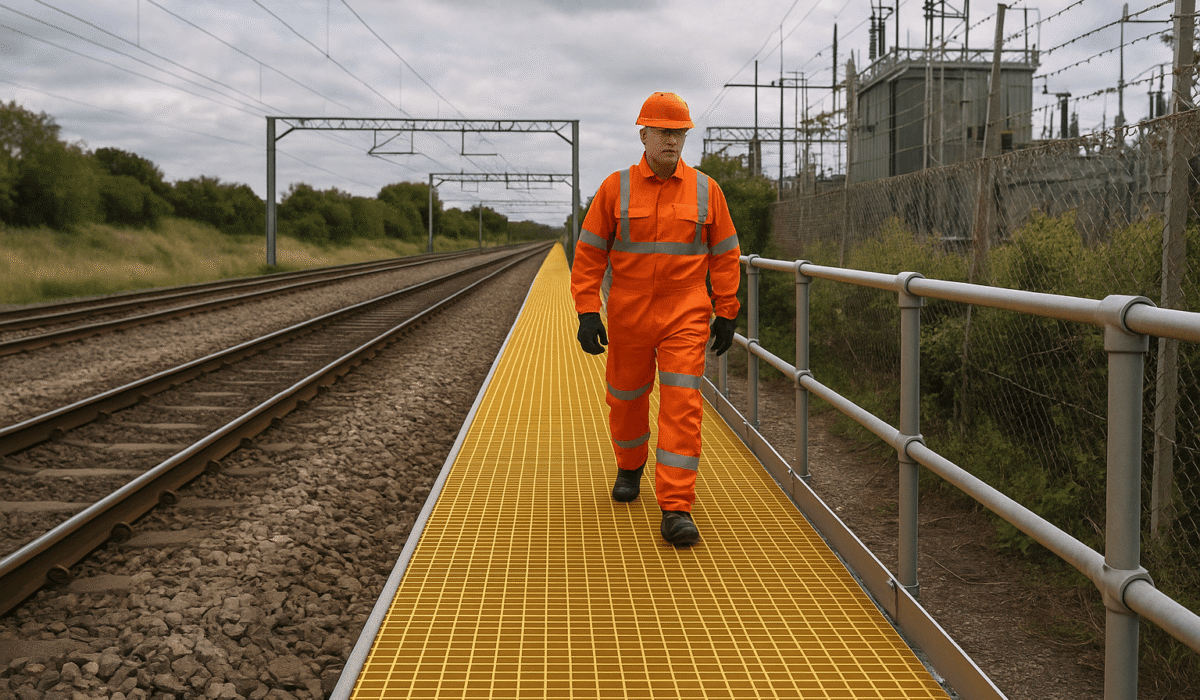
GRP walkways are designed to provide safe, non-slip surfaces for personnel access in demanding environments. In the rail sector, these walkways are frequently installed alongside tracks, platforms, maintenance yards, and overhead structures, where they must withstand exposure to weathering, chemicals, and heavy foot traffic. Their lightweight yet robust fibre reinforced plastic construction allows for easier installation and reduced structural load compared to traditional steel or concrete alternatives.
In utilities, especially within water treatment plants, power stations, and substations, GRP walkways facilitate safe movement over pipework and electrical equipment while resisting corrosion caused by moisture, acids, and harsh chemicals. Their resistance to electrical conductivity also aids in meeting health and safety regulations, providing peace of mind in high-risk zones.
Benefits of GRP Walkways Across Industry Applications
The adoption of GRP walkways in rail and utilities projects brings tangible benefits relating to safety, cost efficiency, and longevity. Unlike metal walkways which require frequent anti-corrosion treatments, GRP resists environmental degradation, thus dramatically lowering the total cost of ownership. Additionally, their inherent anti-slip surfaces reduce workplace accidents, helping companies meet regulatory safety obligations.
From an operational standpoint, GRP walkways offer high impact resistance and flexibility, enabling their use in customised layouts that conform to complex site geometries. This adaptability reduces installation time and disruption to ongoing operations. Consequently, many UK infrastructure projects report improved service continuity and a faster return on investment when incorporating GRP systems.
Real-World Applications of GRP Walkways in the UK Rail and Utilities Sector
GRP Walkways in the Rail Industry
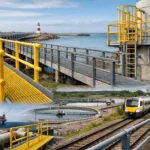
Across the UK rail network, GRP walkways are employed extensively from station platforms to trackside access routes and overhead maintenance gantries. Their corrosion resistance ensures longevity despite constant exposure to rain, diesel fumes, and temperature fluctuations. Rail operators increasingly specify GRP walkways for their low maintenance requirements and compliance with safety standards such as PAS 13 and Network Rail guidelines. The lightweight material also supports easier retrofits within confined spaces, minimising service interruptions.
Applications in the Utilities Sector
In utilities, GRP walkways provide essential support within water treatment facilities, gas terminals, and electrical substations. They enable safe access to elevated platforms and between equipment clusters where corrosion from chemicals and moisture is prevalent. Integrating GRP walkways with other composite products like GRP handrails and GRP flooring creates complete, customisable access solutions tailored for each site’s operational demands. Utilities companies benefit from reduced downtime and lower lifecycle costs, reinforcing the material’s value proposition.
Key Advantages of Using GRP Walkways
- Corrosion resistance ensuring a longer service life with minimal maintenance
- Enhanced safety through excellent slip resistance and non-conductive properties
- Lightweight structure facilitating easier installation and reduced load on support frameworks
- Flexibility in design enabling custom fits for complex industrial environments
Speak to Our Specialists
For tailored advice on how GRP walkways can improve safety and efficiency in your rail or utilities project, contact our experienced team. We provide expert guidance on design, compliance, and installation to ensure your investment delivers maximum return.
Frequently Asked Questions
What makes GRP walkways suitable for rail and utilities sectors?
GRP walkways offer superior corrosion resistance, slip resistance, and are lightweight, making them ideal for harsh outdoor environments and areas exposed to chemicals, typical in rail and utilities facilities.
How do GRP walkways contribute to safety?
They feature anti-slip surfaces and are non-conductive, reducing the risk of slips, trips, and electrical hazards, thereby helping companies comply with health and safety regulations.
Can GRP walkways be customised for complex site requirements?
Yes, GRP walkways can be fabricated to fit intricate layouts and can be integrated with other composite products like handrails and flooring for comprehensive access solutions.
What is the typical lifespan of GRP walkways in industrial settings?
With proper installation, GRP walkways can last 20 years or more, outperforming traditional materials in corrosion-prone and high-traffic environments.
Ready to Improve Performance?
Discover the advantages that GRP walkways can bring to your infrastructure projects today. Visit our website to explore our range of GRP solutions and get in touch for a personalised consultation that aligns safety, durability, and cost efficiency.
If you need expert advice for your project, contact us to speak with our team.